SEO Isn’t Dead. But It Is Being Redefined by AI.
For years, we have had a pretty consistent view on SEO, and it's not that SEO doesn't work but it's the fact that doing it “properly” often doesn't make sense commercially for businesses in the growth stage.
SEO is a compounding channel. But compounding only helps if you can stay in the game long enough to benefit from it. For many B2B teams, paid media makes more sense early on because it gives you far more control over testing, iteration and scale.
That does not mean ignoring the basics. Site structure, indexing and credible backlinks still matter. It just means being honest about what is a long-term asset and what is a short-term growth lever.
But things are quickly shifting, with AI's ever-increasing presence changing SEO landscape in more ways than one.
Execution is being commoditised (and Google is raising the bar)
On one side, execution is being commoditised. Drafting, briefs, keyword clustering and first-pass audits can now be done much faster with AI. That is useful, but it also means the internet is filling up with a lot more low-differentiation content. Google’s March 2024 scaled content abuse policy is clear: producing content at scale to manipulate rankings is spam, whether it is done by automation, humans, or both.
So the new question is not “can we produce more content?” but it's more about “can we produce something worth citing, trusting and acting on?”
Search itself is changing (answers are overtaking clicks)
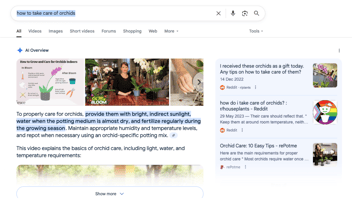
On the other side, search itself is changing. Google is surfacing AI-generated answers through AI Overviews and expanding AI-first search with AI Mode, which was rolled out widely at I/O 2025.
Semrush’s 2025 analysis found AI Overviews appearing on a meaningful share of queries, and studies have shown that click-through rates can drop when AI Overviews appear. Search is still there, but more of the answer now happens before the click.
Clickstream research shows 50–65% of searches now end without a click, which is brutal for any strategy built purely on “ranking = traffic.”
It is not just Google either, OpenAI is making ChatGPT a more search-like discovery surface, which means your first touch may increasingly be a sentence inside an AI answer rather than a visit to your homepage.
So what replaces the old SEO playbook?
That is why we think “SEO vs paid” is the wrong framing now. The better discipline is AI Search Optimisation (or AIEO, AEO, GEO) and designing marketing assets so that AI-driven engines can accurately understand, trust and recommend your brand. Princeton’s research found that GEO can boost visibility by up to 40% in generative engine responses, especially when content includes things like statistics, citations and clear evidence.
The practical shift is simple: your website still matters, but it is no longer the only surface area that shapes discovery.
What AI Search Optimisation looks like in practice for B2B
This is where most teams miss the point. AI visibility is not just a content problem. It is an infrastructure problem. So, if you want to show up in AI answers, you need to make it easy for machines to extract and verify what is true about you.
Here is the execution path we recommend.
Build an AI‑readable “source of truth”
Start with an AI-readable source of truth. Structure your offers, positioning, proof, policies and service detail so they are machine-readable. Google’s own documentation says structured data helps Google understand content and can improve how pages are interpreted and presented.
For most B2B companies, that means clear service pages, a maintained FAQ or knowledge base, and schema where it actually adds clarity. The goal is to reduce ambiguity. If an AI system has to guess, you lose.
Publish proof, not fluff
Then publish proof, not fluff. Google’s guidance still rewards helpful, reliable, people-first content, and that matters even more in an AI answers world. Implementation guides, technical comparisons, case studies with real constraints and decision frameworks are easier to trust and cite than generic thought leadership.
Treat paid as your testing engine and feed the learnings back into AI visibility
Paid media still plays an important role here too. It gives you a testing engine for messaging, ICP angles, offers and creative. The winning ideas should feed your knowledge base, your proof content and your service catalogue. That is how you build compounding assets without waiting 12 to 24 months and hoping SEO eventually works.
Instrument AI referrals and “being cited”
You should also start tracking AI referrals properly. If AI engines are sending traffic, that needs to be visible in reporting rather than disappearing into “direct/none”. The simple questions are: are AI engines sending visitors, which pages are they landing on, and are they converting?
The takeaway
SEO is not dead but it is being repriced and rerouted by AI.
The nature of search is changing fast and it's still important, but people are increasingly getting what they need before they click through to a website.
That means growth teams need to be a bit sharper about where they focus. You still need levers you can control if you want a predictable pipeline, and you need your content, structure and reporting set up so that AI search can actually understand and show what makes your business different.
If you want to build that in a way that is fast, measurable and tied back to your CRM and attribution, 24GO can help, contact us here.
.png?width=352&name=HubSpot%E2%80%99s%20AI%20Search%20Dashboard%20(1).png)